Quick answer
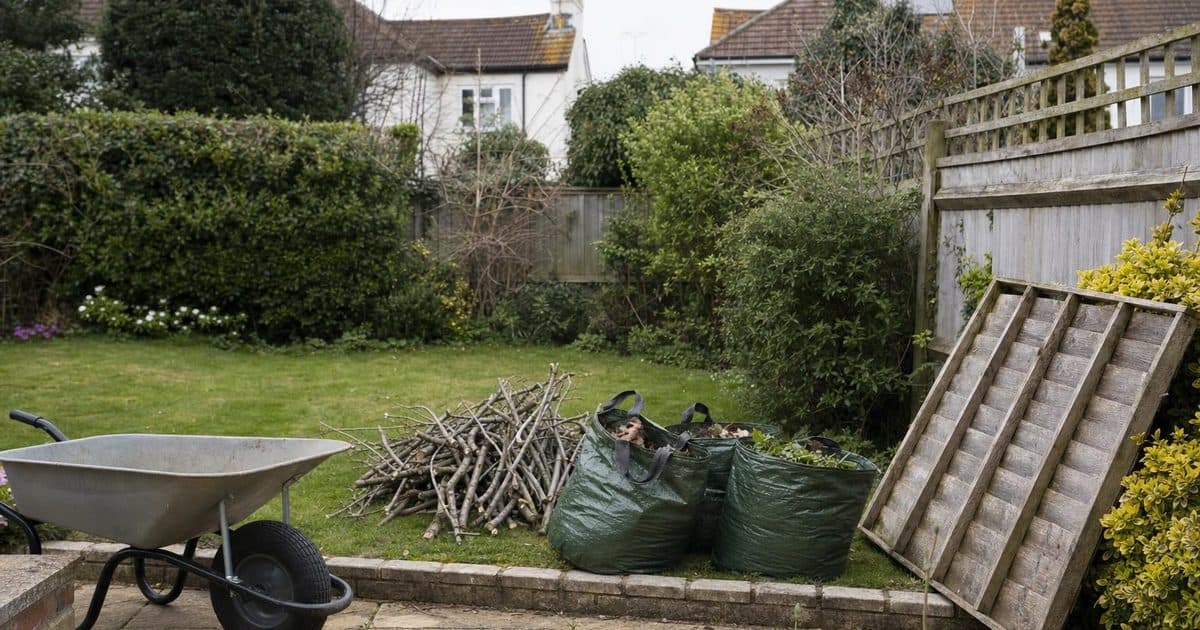
Before booking garden clearance, separate soil, branches, turf, fence panels, and green waste if you can. Check access to the garden, note any sheds or bulky items, and mention whether the job includes demolition or just removal.
What to sort before you bookSection titled What%20to%20sort%20before%20you%20book
A little preparation can make garden clearance much simpler. If you already know what needs to go, the team can bring the right labour, vehicle space, and tools for the job.
Try to group items by type if you can. For example, keep loose green waste together, stack timber or fence panels separately, and set aside heavy materials such as soil, turf, or rubble. That makes it easier to work out what is involved and can help avoid delays on the day.
Common garden items that may need separate handling include:
- Branches, hedge cuttings, and leaves
- Turf and topsoil
- Old fencing, trellis, and broken sheds
- Pots, planters, and broken garden furniture
- Bags of mixed garden waste
- Stones, slabs, or rubble from old paths and borders
If you are also clearing out a shed, garage, or side passage, it may be worth mentioning that at the quoting stage too. Jobs that involve more than simple garden waste removal can take longer and may need different disposal arrangements, such as Shed Clearance or Garage Clearance.
Separate green waste from heavier materialsSection titled Separate%20green%20waste%20from%20heavier%20materials
Green waste is usually easier to remove when it is kept apart from heavier loads. Branches, hedge clippings, and leaves can often be loaded differently from soil, turf, or broken paving.
If everything is mixed together, it can be harder to estimate the space needed. That is especially true if the garden contains wet soil, compacted turf, or awkward items hidden under piles of cuttings.
Decide what should staySection titled Decide%20what%20should%20stay
Before the team arrives, walk around the garden and mark anything you want to keep. This helps prevent confusion when tools, pots, decorations, or timber are near the clearance area.
It is also useful to move personal items such as cushions, garden ornaments, children’s toys, and hose pipes out of the way. That keeps the working area clear and makes the job smoother from the start.
How to get a more accurate quoteSection titled How%20to%20get%20a%20more%20accurate%20quote
The more detail you can give, the easier it is to provide a fair quote. A simple description of the garden and what needs removing is usually enough to start with, but photos can help even more.
When asking for a quote, it helps to include:
- Rough size of the garden or clearance area
- Whether the waste is loose, bagged, or stacked
- If there is soil, rubble, or timber mixed in
- Whether the job includes dismantling
- Any access issues, such as narrow side gates or steps
- Whether the team will need to pass through the house
If the job involves building waste as well as garden waste, it may fall closer to Construction Waste removal than a standard garden clearance. Being clear about that upfront makes planning much easier.
| What you mention | Why it helps |
|---|---|
| Soil, turf, branches, and fence panels | Helps estimate the type and volume of waste |
| Shed or fence demolition | Clarifies whether tools and extra labour are needed |
| Narrow access or rear garden entry | Helps plan how items will be moved out |
| Mixed waste or bagged waste | Makes loading and disposal easier to organise |
If you are unsure whether something counts as garden waste, describe it rather than guessing. A quick photo of the area can often answer more than a long message.
Checking access and collection day detailsSection titled Checking%20access%20and%20collection%20day%20details
In Eastbourne, many gardens have side access, shared paths, steps, or narrow gates. Those details matter because they affect how quickly a clearance can be done and whether larger items can be taken out safely.
Before collection day, check:
- Whether a van can park close to the property
- If the rear garden is reachable through a side entrance
- Whether gates open fully and paths are clear
- If there are low walls, tight corners, or steps
- Whether items need to be carried through the house
It also helps to mention if there is any fragile paving, freshly planted areas, or uneven ground. That allows the team to work carefully and avoid avoidable damage.
Tell the team about sheds, fences, and bulky itemsSection titled Tell%20the%20team%20about%20sheds%2C%20fences%2C%20and%20bulky%20items
Bulky structures can change the job quite a bit. A shed that needs clearing is different from a shed that needs taking down, and the same goes for fence panels, gates, or pergolas.
If the work includes dismantling, say so clearly when booking. That way, the job can be planned properly and you will not be left with an unexpected second stage. For structure removal, you may also want to look at Shed Demolition or Garage Demolition.
Mention anything awkward or difficult to moveSection titled Mention%20anything%20awkward%20or%20difficult%20to%20move
Items that are heavy, damp, broken, or stuck in place can take more time to remove. That includes old planters filled with soil, waterlogged timber, concrete posts, and broken slabs.
The more honest you are about the state of the garden, the easier it is to arrange the right service. It is much better to mention a difficult item in advance than to discover it only once the team is on site.
When garden clearance becomes a bigger jobSection titled When%20garden%20clearance%20becomes%20a%20bigger%20job
Some garden clearances are straightforward. Others grow into larger projects once the team starts moving through the space. If there is a lot of mixed waste, damaged timber, or old outbuildings, it may be more than a simple tidy-up.
This can happen when the garden includes:
- A collapsed shed or broken fencing
- Builders’ rubble mixed with garden waste
- Old furniture or white goods left outside
- Large amounts of wet soil or turf
- Overgrown areas that hide more waste underneath
In these cases, it is useful to separate the jobs in your mind: what is garden waste, what needs demolition, and what is general household rubbish. If the garden contains mixed items from around the property, House Clearance or Rubbish Removal may also be relevant.
A clear description helps avoid surprises and makes it easier to book the right team for the right amount of work.
What to do after the clearanceSection titled What%20to%20do%20after%20the%20clearance
Once the waste has been removed, take a few minutes to check the space before the team leaves. It is easier to spot anything missed while the area is still empty and accessible.
A simple post-clearance check can include:
- Looking behind sheds, borders, and bins
- Checking for small offcuts or nails
- Making sure any agreed items have been left in place
- Confirming that access routes are clear again
After that, you can decide whether the garden needs a further tidy, new planting, or repairs to fences, paths, or sheds. If you are planning more work, it may help to clear the area in stages rather than doing everything at once.
Keeping the next step simple can make the whole process feel more manageable, especially if the garden has been neglected for a while.
Garden getting on top of you?
We clear green waste, old fencing, sheds and mixed garden loads across Eastbourne — tell us what needs to go for a free, no-obligation quote.