Quick answer
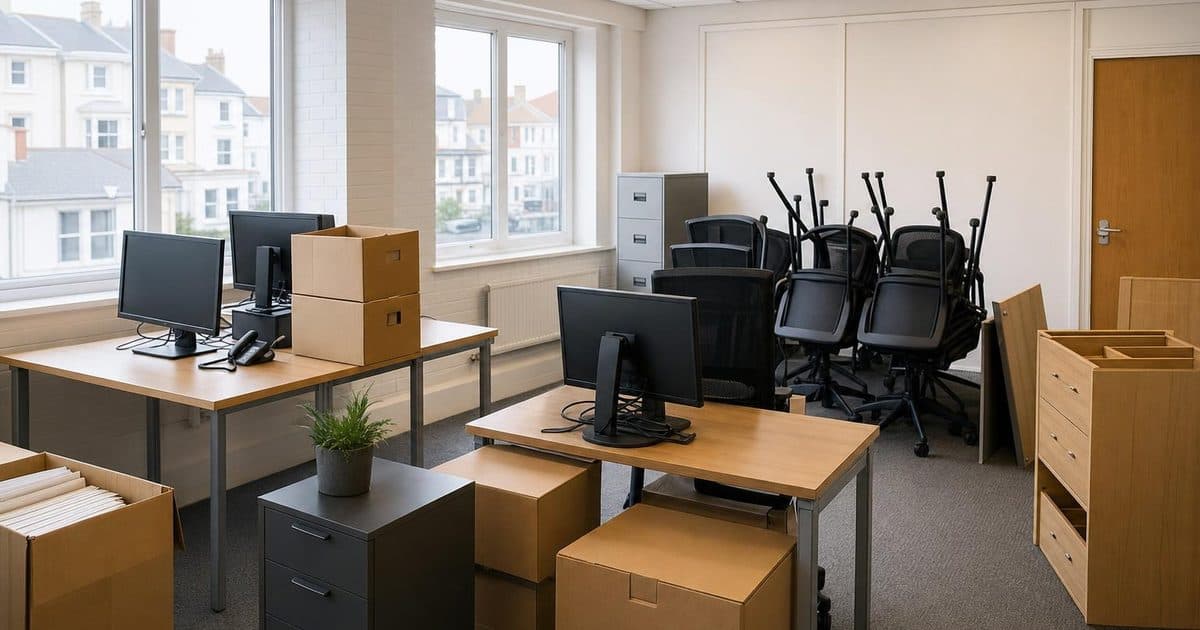
For an office clearance, list furniture, IT kit, files, white goods, and any confidential waste separately. Tell the clearance team about access, parking, lift use, and whether the office needs clearing floor by floor.
What to sort before the clearanceSection titled What%20to%20sort%20before%20the%20clearance
A good office clearance starts with a simple list of everything in the workplace. Small businesses often find that the biggest delays come from mixed items, so it helps to separate the office into clear groups before the team arrives.
Focus on the main categories first:
- desks, chairs, storage units, and meeting room furniture
- computers, monitors, printers, phones, and cabling
- paper records, archive boxes, and office stationery
- kitchen items such as microwaves, fridges, and kettles
- general rubbish, packaging, and broken equipment
If you are moving out of the whole site, it is also worth checking cupboards, lockers, under-desk storage, and shared areas. Small items are easy to miss, especially in busy offices where several people have used the space.
Separate items that need special attentionSection titled Separate%20items%20that%20need%20special%20attention
Some office items should be handled apart from general waste. This makes the clearance smoother and helps avoid confusion on the day.
Keep these items in their own piles or rooms where possible:
- confidential paperwork
- IT and electrical equipment
- bulky furniture
- white goods and kitchen appliances
- anything that may need reuse, donation, or a separate disposal route
If you are unsure whether an item belongs with the general office clearance, it is usually best to flag it early when you book. That gives the team a clearer picture of the job and helps them bring the right equipment.
How to prepare the office spaceSection titled How%20to%20prepare%20the%20office%20space
Before the clearance, make the site as easy to work in as possible. Even a modest office can slow down if boxes, cables, and loose items block the route out.
Start by clearing walkways, removing personal items from desks, and packing any files you want to keep. If the office is still in use for part of the week, choose one area to prepare at a time so staff can keep working elsewhere.
A few practical steps can make a big difference:
- label rooms, floors, or zones if the office is spread out
- unplug devices where it is safe to do so
- gather keys, fobs, and access codes in advance
- check whether items need to come down stairs or through a lift
- move smaller loose waste into one area rather than leaving it scattered
Plan around staff, clients, and contractorsSection titled Plan%20around%20staff%2C%20clients%2C%20and%20contractors
In Eastbourne, many small businesses operate from shared offices, retail units, or mixed-use buildings. If that applies to you, let nearby tenants or building managers know when the clearance is due to happen.
It also helps to plan the job around your own working hours. For example, some businesses prefer an early start before clients arrive, while others choose a quieter afternoon or a weekend slot. The goal is to keep disruption low and make it easy for the clearance team to work safely.
Handling IT equipment and confidential wasteSection titled Handling%20IT%20equipment%20and%20confidential%20waste
Office clearances often include old computers, printers, and boxes of paperwork. These items need a bit more thought than standard furniture because they may contain data, cables, batteries, or other parts that should not be mixed with general rubbish.
What to do with computers, screens, and cablesSection titled What%20to%20do%20with%20computers%2C%20screens%2C%20and%20cables
Group all electrical items together so they can be identified quickly. This may include desktop towers, laptops, monitors, docking stations, printers, scanners, routers, and spare cables. If you have any equipment that is still working, keep it separate from broken items.
It is also sensible to check for:
- backup drives and memory sticks
- chargers and power leads
- batteries in wireless devices
- old phones and handsets
- devices stored in drawers or cupboards
If you need a separate service for electronics, see our E Waste Disposal page.
Keep confidential documents separateSection titled Keep%20confidential%20documents%20separate
Paper records can build up quickly in small offices, especially if files have been stored for years. Before the clearance, decide what will be kept, what will be shredded or disposed of, and what can go with the main load.
Do not leave confidential folders mixed in with general waste. Put them in clearly marked boxes or bags so they are easy to identify on collection day. That makes the process calmer for everyone and reduces the chance of important documents being overlooked.
If the office clearance includes a large amount of paperwork, you may want to allocate one team member to oversee it while the rest of the site is being cleared.
Furniture, fixtures, and other bulky itemsSection titled Furniture%2C%20fixtures%2C%20and%20other%20bulky%20items
Office furniture is often the most visible part of a clearance. Desks, pedestal units, shelving, reception furniture, and meeting tables can take up a lot of space and may need to be removed in a specific order.
If you have furniture that needs to be dismantled, mention that when you book. The same applies to built-in storage, wall-mounted items, and awkward pieces that will need extra handling.
Here is a simple way to think about bulky items:
| Item type | Best approach |
|---|---|
| Desks and chairs | Keep together by room or floor |
| Filing cabinets and storage | Empty them before collection |
| Fridges and microwaves | Separate from general furniture |
| Shelving and display units | Note if they need dismantling |
| Reception counters | Measure access points in advance |
If you have a larger office fit-out or a mixed clearance with more than just furniture, our Furniture Removal and Commercial Waste Removal services may also be useful depending on what needs to go.
Planning access, parking, and timing in EastbourneSection titled Planning%20access%2C%20parking%2C%20and%20timing%20in%20Eastbourne
Good access planning can save a lot of time on the day. This is especially important in Eastbourne town centre, where parking, loading space, and building access can vary from one site to another.
Before the clearance, check and share the following:
- whether there is a loading bay or reserved parking space
- if the team needs to use a lift
- how many floors the office covers
- whether there are narrow stairways or tight corners
- if there are any time restrictions on access
- whether the building manager needs advance notice
Tell the team if the clearance is floor by floorSection titled Tell%20the%20team%20if%20the%20clearance%20is%20floor%20by%20floor
Some offices are best cleared one floor at a time, especially if different departments are closing at different stages. In that case, it helps to label each floor and confirm which areas should be emptied first.
This is also useful if some parts of the office are staying open. A floor-by-floor approach can help you protect active work areas while the clearance is being completed elsewhere.
After the clearance: final checks and next stepsSection titled After%20the%20clearance%3A%20final%20checks%20and%20next%20steps
Once the main items have gone, do a final walk-through of the office. Check desks, drawers, cupboards, kitchen areas, storage rooms, and any spaces that were not used every day. It is surprising how often small items are left behind.
A final check should cover:
- plugs and cable runs under desks
- keys, fobs, and secure access items
- documents stored in drawers or cabinets
- personal belongings
- reusable items that may have been set aside
If the office is being handed back to a landlord or managing agent, make sure you know what condition the room needs to be left in. Some businesses also choose to combine clearance with other services such as E Waste Disposal for redundant IT equipment, or Commercial Waste Removal for a more complete commercial tidy-up.
For Eastbourne small businesses, the main aim is usually simple: clear the space without unnecessary delays, keep important items separate, and make the handover as smooth as possible.
Planning an office clearance?
Tell us about your Eastbourne workspace and we will give you a free, no-obligation quote — desks, IT kit and bulky furniture handled in one visit.