Quick answer
Electricals should never go in the general bin. Small items go free to a recycling centre or a shop take-back point; working kit is worth donating; and a private collection handles broken TVs, bulky electricals or a full clear-out in Eastbourne.
What counts as e-wasteSection titled What%20counts%20as%20e-waste
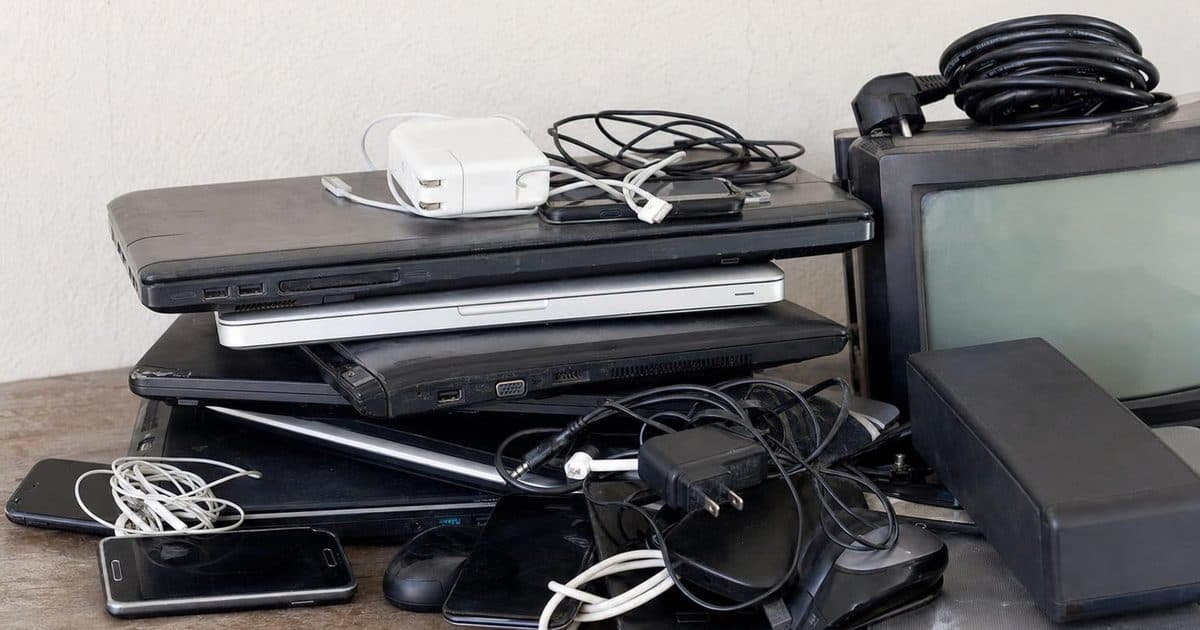
WEEE — waste electrical and electronic equipment — covers anything that runs on a plug, battery or cable, or carries the crossed-out wheelie bin symbol. It's a much wider category than most people assume, running from the obvious to the easily forgotten drawer full of leads and chargers.
- Phones and tablets
- Computers and laptops
- TVs and monitors
- Small appliances (kettles, toasters, hairdryers)
- Cables and chargers
- Batteries
880 million
Unused electrical items held onto in UK homes
Material Focus, Nov 2025
100,000+ tonnes
Electricals still thrown away in general waste each year
Material Focus, Nov 2025
1,200+
Battery fires in UK bin lorries and waste sites last year
Material Focus, 2025
Why it should never go in the binSection titled Why%20it%20should%20never%20go%20in%20the%20bin
Electricals in the general bin create a genuine fire risk long before they reach landfill: lithium-ion batteries hidden inside phones, vapes and small gadgets caused more than 1,200 fires in UK bin lorries and waste sites last year, a 71% jump on the year before, according to Material Focus. Crushed or compacted in a collection vehicle, a damaged battery can ignite the whole load.
Beyond the fire risk, binned electricals take valuable, recoverable materials like copper, steel and precious metals straight to landfill instead of back into circulation. Householders aren't breaking the law by binning a phone charger, but recycling it properly is what keeps those materials usable and keeps hazardous substances out of the ground.
Recycling centres serving EastbourneSection titled Recycling%20centres%20serving%20Eastbourne
The Eastbourne household waste recycling site on St Philip's Avenue is run by East Sussex County Council and takes electricals free of charge, with separate containers to keep them safely apart from general waste. That includes:
- Technology and small electricals — phones, laptops, printers, cameras, radios and games consoles
- TVs and monitors
- Batteries, kept in their own container due to fire risk
- Electrical white goods, garden power tools and other plugged-in items
All visits must now be booked in advance, either online or by calling 0345 60 80 194, and you can book for the same day or up to two weeks ahead. Cars can visit any day the site is open; vans are only allowed on Tuesdays, Thursdays and Saturdays. Since booking rules and opening hours can change, check the official site page before you go.
Shop and retailer take-back schemesSection titled Shop%20and%20retailer%20take-back%20schemes
Under the UK's retailer take-back rules, any shop selling electricals must offer a way to recycle your old item free of charge when you buy a similar new one — either by taking it back in store or online, or by funding local recycling centres through the Distributor Take-back Scheme instead. Where a retailer takes items back directly, you normally have 28 days from your purchase and just need the receipt.
Currys is the most useful named example locally: any of its stores will recycle small electricals and electronics for free, including items bought elsewhere, and it runs battery recycling bins in every store. For larger appliances, Currys can take the old one away for recycling when it delivers a replacement. Several other large retailers, including B&Q, Waitrose and John Lewis, also accept small electricals in store without requiring a new purchase.
What Eastbourne Council will collectSection titled What%20Eastbourne%20Council%20will%20collect
Eastbourne does not have a kerbside small-electricals or battery collection — that scheme currently runs only in the Rother, Wealden and Hastings council areas, since Eastbourne and Lewes use a different waste contractor. Loose electrical items and batteries should instead go to the recycling centre, a retailer take-back point, or an electrical item bring bank.
Large household electricals are a different matter: fridges and freezers, washing machines, tumble dryers, cookers, ovens, hobs and dishwashers are all eligible items under the councils' chargeable bulky waste collection service, currently £52 for up to three items and £11 for each extra one. Small electricals, cables and batteries aren't what the bulky waste service is for — those should go to the recycling centre, a retailer take-back point or a bring bank instead — and it's worth confirming any specific item on the bulky waste items page before you book. Council prices and rules change, so it's worth checking the official page first.
Wipe it, then donate or reuseSection titled Wipe%20it%2C%20then%20donate%20or%20reuse
Clear your data firstSection titled Clear%20your%20data%20first
Before anything leaves the house, sign out of accounts and factory-reset phones, tablets and laptops so no personal data goes with them. For a computer or hard drive that's held anything sensitive, a factory reset alone may not be enough — a secure wipe or physically destroying the drive is the safer option if you're not confident it's been properly cleared.
Where to donate working electronicsSection titled Where%20to%20donate%20working%20electronics
If it still works, it's worth trying to donate it rather than recycle it — reuse is the better outcome, and someone locally will usually want it. The British Heart Foundation runs a furniture and electrical store at 202 Terminus Road, Eastbourne, and offers a free home collection service for working electrical items — book online and your local store will be in touch within five working days, or you can drop items off directly at the store.
Items need to be complete, working and undamaged, since everything donated is resold to raise funds — check the items they can't accept page if you're unsure whether yours qualifies.
When a private collection makes senseSection titled When%20a%20private%20collection%20makes%20sense
A private collection earns its keep when there's a mix of broken electricals alongside other waste — a house clearance, an office clear-out, or a TV too big and awkward for the car. Eastbourne Waste Collection collects e-waste alongside general clearance loads, with everything disposed of through a licensed carrier.
Your main routes side by side
Recycling centre or take-back
Best for: A few portable items and you have transport.
- Cost
- Free
- Timing
- Book ahead for the recycling centre; shop take-back is instant
- The Eastbourne recycling site on St Philip's Avenue takes electricals free
- Free for household electricals
- You do the sorting and transport
Collection with Eastbourne Waste Collection
Best for: Bulky electricals, mixed loads or whole-property clear-outs in Eastbourne.
- Cost
- Priced by load and access
- Timing
- Same-day and next-day slots available
- TVs, appliances and mixed e-waste in one visit
- Collected from inside the property
- Licensed disposal with reuse and recycling first
Got more than a boot-load?
We collect e-waste, appliances and mixed clearance loads across Eastbourne — carried out, recycled responsibly.
Which option fits your situationSection titled Which%20option%20fits%20your%20situation
Match your situation
A drawer of cables, chargers and small gadgets
Recycling centre or shop binCurrys and other large retailers take small electricals free, no purchase needed.
It still works
Donate or sellWorking electronics are worth more reused than recycled.
A fridge, washing machine or other large appliance to get rid of
Eastbourne Council collectionLarge household electricals are eligible bulky waste items, from £52 for up to three.
A broken TV, several appliances or a full clear-out
Private collectionOne visit, carried from inside, disposed of with a licensed carrier.
Related servicesSection titled Related%20services
Want it gone without the lifting?
Tell us what needs to go and we will give you a free, no-obligation quote for Eastbourne and nearby areas.